Tech

New Products

Random Thoughts

Nostalgia

Showing posts with label Events. Show all posts

The 2019 Great Race... John Hudson

Posted on 7/3/19 with No comments

Winning the Great Race does not happen overnight, it literally takes years and years of practice so most everything you do becomes second nature, you don't have to think about what to do, you automatically do it. In the 2019 race John Hudson and his son Greg drove John's 1940 Chevy coupe in the Great Race. John is an excellent mechanic who ran an auto repair garage in Baldwinsville New York for forty years.  His son is now running that garage, so both are excellent mechanics.

John has been helping Howard Sharp for close to thirty years work on the cars he has entered in the Great Race. Howard started out in the Great Race with a 1929 Dodge Sport Roadster one of only 1200 made. Howard was my second Great Race customer in 1990 after he watched Bud Melby and his 1936 Cord go thru the entire race and not change out a battery the entire race.

Howard, like most entrants in those early days swapped batteries at noon each day, the charging systems on the antique vehicles simply couldn't keep up with the electrical load. In the early days... the rule was the cars entered had to be 1945 and older. Today they can be as new as 1965.

I grew up driving Chevrolet pickups and owned and fixed up close to 50 of those during my high school years (which is how I came to invent the 6-volt alternator) so  knew all of their weak spots. John is an old Chevrolet man at heart so we immediately hit it off.

About five years ago John decided he wanted to try his hand at the Great Race. He knew he could make his Chevrolet reliable enough for the task and with a few parts from Fifth Avenue he was in business. He employed his Grandson Scott to be the navigator who was very good at math and they did well. Scott newly married, and a new job didn't have the time to compete in the 2019 race so John's son Greg stepped up and served as navigator for the 2019 Race.


Car 60 finished 27th out of 125 cars which is a very good showing especially with a new navigator. The navigation is very mentally challenging and it takes about ten years to learn it well but John's son picked it up pretty quickly. I was happy to sponsor John and his son in part because I can relate to his Stovebolt Chevrolet roots. We also had a long working relationship with the cars Howard owns.


Made it all the way to the finish line!


Over the pass in Oregon saw the temperature drop to 28 degrees


Who wouldn't be proud to own this Chevrolet...?


John Hudson the driver and his son Greg the navigator...


By now you know what the clock, speedo, and lap board is for...


Check out this optional accessory steering wheel. It is the only one I have ever seen. It is a very rare factory accessory.


Yes those are Ace awards for a perfect score on a leg, which is the distance between two check points. Wide whites...it doesn't get any better than that!
READ MORE

Bathroom Overhaul

Posted on 3/28/19 with No comments

It was bound to happen sooner or later. I stood in the doorway of the bathroom  in our finished basement downstairs, and decided it definitely needed an overhaul. Sure it functioned well but the cheap looking imitation marble sink and fake front oak cabinet blended in way to well with the 1970's flooring. It all had to go.

The picture you see at the top of this page, is what the bathroom looked like with the 1970's toilet and the sink removed, along with all of the base board trim and the white tile ceiling panels. The picture was taken just before the floor covering was removed. Nothing would be saved!

I decided I would build most of the furniture and the decor for this bathroom, so the planning started.

I decided the bathroom sink should be made from a parts washer and would include hot and cold water. The walls should be some kind of barn siding, the ceiling should be corrugated tin, and from then on... one thing led to another.


The parts washer sink is now plumbed for hot and cold water,  The drain is 5/8 heater hose using a 4 step hose adapter from a dishwasher install kit. The braided water lines are also from a dishwasher install kit with adapters to tie into the service lines and drain in the wall.


The sink works as it is supposed to. I have a plumber friend Arden Rozean who helped with the plumbing. He dug thru his warehouse to find the old brass fittings and adapters, some he hadn't used in twenty years.

I spent the next year collecting and building parts of the bathroom. Finally the parts washer sink was done, and it was onto the Chevrolet engine intake and soap dispenser, followed by the running board shelf, followed by the restoration of two antique Benjamin porcelain barn lights, and the new TP holder. Finally after a year I had everything gathered up and it was time to start on the bathroom.


This is the soap dispenser made from a 1950 six cylinder Chevrolet intake manifold. I removed the stem in the middle of the oil filter canister then sandblasted, painted, and put fresh decals on the filter housing. The 1/4" ball valve on the bottom of the filter dispenses the liquid soap and the clear hose on the LH side tells how much soap is left in the filter.

First up... I decided I wanted a mural on the floor, and it had to be a 3D mural so it looked real, and would give you pause, so when you first saw it... your mind and your body would not agree that you were looking at the same thing. I talked to good friend Bart Thomas who runs a sign billboard company. I said I want a billboard on the floor of my bathroom!

After some thought he said... "send me down what you want and we can figure out a way to do that." So I sent him four pictures from an estate collection that I had appraised about ten years prior. Bart photo shopped the pictures together, right down to even matching up the blades of grass and leaves, and created a 7' x 7' mural. It turned out like this...


Now it was time to prep the bathroom floor and install the mural. My original plan was to install the mural just like this picture so when you walked in the door this is what you see. Bart suggested we turn it a forth of a turn counter clockwise to the left, so the steering column would come out from under the wall of the bathroom to give it more depth and more of a 3D look. He was right... it even made it look more 3D with much more depth. Here is what the mural looked like installed.


The red plug is where the toilet goes. The barn siding paneling is up, (which is actually an exterior barn siding from Lowe's). The floor truly does look like it has some depth.

I found out in the 1980's that there was once a "Rundle" plumbing company located back east, that was in business from the 1920's until sometime in the mid 1960's. I found an add on eBay that showed a Rundle toilet from the 1960's as part of the "ultimate" bathroom collection. I now knew what one looked like and set out to find one.


I finally got one and replaced all of the old internal parts with modern replacements. Now I have my "modern" Rundle toilet, the same one shown in the advertisement.


A Genuine Rundle Toilet from the 1960's

Next up I needed a toilet paper holder. I decided to build my own using a wrench from on old printing letter press. In my past life I was a printer, and learned to run one of the old "snap presses."  This wrench was apart of a tool kit that got scrapped along with an old snap press sometime in the late 1980's. OSHA would have a field day with those presses today, but back when I ran them, nobody gave it a second thought.


The only downfall I discovered to using this wrench was the size of the bolt  and nut it was supposed to fit. It proved to be neither American or Metric. I finally figured out it was a size called British Standard something that was no doubt common when that press was built in the 1930's. I ended up making a nut and bolt for the wrench. Got a metric set that was close and spent some time in front of the bench grinder. It worked. I then took the TP holder out to the local farm machinery manufacturing company and had it powdered coated. They coat everything red so red it became!


Sometime in the early 1990's, a local farmer stopped in my store and said... "I have something in my ditch with your name on it, better come check it out."
I did go check it out and it was part of a 1946 Ford truck that once belonged to my granddad as evident by the lettering on the door. I never knew the truck existed till then.  It had been pushed over a bank and ended up in a deep ravine. More than a little worse for wear I decided I was going to save something from it.

About all that was worth saving was the passenger door, which took me all day to rescue. I stored my treasure away in the back of my store for the next twenty years... not sure what to do with it. After working on the bathroom project for a while, I knew exactly what to do with it. I restored the lettering on the door using the faded lettering outline on the original door. Then I hand sanded the door using fine river sand to age the lettering and the door to get the "patina" of the "found in the ditch look."

I then put a mirror where the window glass once was and that became the bathroom mirror in the new bathroom.


The door lettering turned out great. I left the rest of the door pretty much as I had found it including the sweat equity proudly displayed on the door sill.


Above the door I installed an original 45 degree Benjamin porcelain light that came off of an old Texaco street sign. The light is about the same age as the door.
I restored another original Benjamin barn light to go over the parts washer sink.


I also remember going into old garages and machine shops growing up and in the bathroom of most of them was a shelf above the sink where they emptied their pockets before they washed their hands and went home for the day. There was always parts like spark plugs, cans of some fuel additive or radiator treatment, wrenches, odd and ends. I decided I needed one of those shelves so I built one out of a piece of an old Ford Model T running board.


The light switches are the old push button type with the mother of pearl inlay on the buttons. The covers are nickel plated art deco style covers.


The last thing on the list was the ceiling. The white perforated drop ceiling tiles were replaced with used corrugated tin from an old warehouse. That really changed the look of the ceiling. I am not sure how many people will be looking up, most will be looking down and trying not to trip on a car part on the floor.


The bathroom project is complete and it turned out pretty well, and is a stark contrast to the bathroom that was there before. It took a little longer than I thought to find the parts I needed to build the interior. There are always hitches in projects like this, and this one was no exception.

The exterior paneling I chose to use turned out to be a discontinued item from Lowe's, so after buying all they had at the closest Lowe's store 60 miles away from where I live in Salina Kansas, and being two sheets short, I tried to order more. No longer available is the reply, it is a discontinued item So after spending half a day on the Internet I finally find a store that has more of the paneling in stock, but it is 200 miles away in Lee Summit Missouri!

I went and got it after confirming twice that they actually had it in stock, and yes I bought a couple of extra sheets... just in case. But it was all worth it in the end especially when you look at what I started with. Now, it is on to the next adventure.
READ MORE

Driving 133 mph On A County Road In Nebraska

Posted on 9/26/17 with No comments
Most of us have a few crazy ideas hidden in the back of our minds, of things we wish we could do or experience but know that in real life it is not possible. This seems to be true more so today then it did when I grew up in the 1970's. Growing up in a small town we drag raced on the edge of town. As long as we did not get to crazy and used a little common sense, all was good up to a point.

The bad thing about living in a small town was that local law enforcement knew who the drag racers were, and if you pissed them off, you got nailed for any small driving infraction they could come up with. It was to teach you a lesson...they called it an "attitude adjustment" which usually adjusted your checkbook.

While that seemed harsh then, I can't imagine growing up in todays world. Everything today is so by the book... the things we did growing up in my younger days would have us in jail today.

So as I am reflecting on this... a customer calls me and tells me he just got back from the Sand Hills Open Road Challenge in Arnold Nebraska. What the heck is that...I asked?

"Man you won't believe it! They block off 26 miles of local county roads and let cars run flat out as fast as they can, and they time them to see who has the fastest time. There are classes for different cars and all of the high dollar cars show up from the west and east coast! Corvettes, Vipers, GT 500 Mustangs, anything that goes seriously fast is there...."


This is the 26 mile course

"Then they do what is called a mile shootout. They block off three miles of straight highway and you have a mile to get up to speed, they measure your top speed in the next mile and you have a mile to slow down!"

"No way...not in 2016 would they let you do that! The lawyers and the insurance companies would have a field day with that one...I say!"

So he sends me to the website http://www.sorcrace.com (just copy and paste in your search engine) and I find out everything he says is true and more. The race is held in and around Arnold Nebraska which has a population of 578 people.

With no motels around for 40 miles all of the local residents open up their homes and rent out sleeping rooms to the racers. The local church groups put on pot luck dinners as fund raisers and the racers more than make it worth their while. This is too good to be true!

Just as he explained...this happens NOT on a race track, this happens on regular county roads that the farmers and the locals use the other 51 weeks a year. These roads are normally full of farm machinery and stock trailers, not high dollar racing cars, most of which happen to be street legal.

The entrants of the race all seem to agree...what is the purpose of having a fast car if you cannot drive it fast. When they come here they can drive fast and be safe. All of the cars are inspected before they are allowed to run on either course. Entrants can sign up for the road course or the mile shootout or both. The number of entrants is limited (usually around 110 entrants total all classes) and there is a waiting list. That should come as no surprise!

This has been going on since 2002. Meanwhile...back to the 133 mph speed. In the early days of the race there was an unlimited class. One entrant took that literally and brought his 700 hp Nextel Monte Carlo to town. He installed a Go Pro camera on the roll bar which was state of the art technology in 2006. While the video is not as clear as it would be today you can see and hear everything that went on in the car as he sat a course record. You can watch the video on you tube here...(just copy and paste this link in the "you tube" search box)

https://www.youtube.com/watch?v=HHZx24LcIpM

Keep in mind as you are watching this... that the guy did his homework. He knew from his research exactly how fast he could take each corner. His wife served as his navigator and had the job of yelling out his corner speed and either right or left hand corner. How many wives would be willing to ride along and not scream at the top of her lungs when he got to 190 mph on the straights?

He covered 26 miles of twisty farm roads in less than 12 minutes. His average speed was 133 mph and his top speed was 192 mph. There is no longer an unlimited class so his record will stand for eternity. That is no doubt a relief to many.

After watching the video and looking over the website I decided I had to go and check this out for myself. Turns out everything I learned about is still true. You can go and watch the cars on the 26 mile course from a high vantage point, but you have to be there before the race starts (first car leaves at 8:00 am) and you can't leave until after the race, which usually gets over by 4:00 pm, so pack your lunch, literally) because you drive to the vantage point on the same county roads the race cars drive on.

I drove the 26 mile course on Friday night before the race and I have to say it was eye opening. It was rough in places... the radius of some of the corners were kind of sharp... and there were combines and tractors parked in the fields next to the road to remind me where I was. The corners marked 35 mph I drove at 45 and couldn't imagine taking them at 65 or 70 mph.

All in all... it was a unique experience, and I plan to go again. If you want to go, you must plan ahead and either take a motor home so you have a place to sleep (there is a small RV park close to town) or get on the list to rent sleeping rooms, which are typically reserved from a year to three years in advance.

The spirit of cooperation from all of the local citizens and local law enforcement is truly amazing. Everybody pitches in to help accommodate the racers and the racers have in turn donated back to the community.

All of the local business provide some sponsorship including the local bank, implement dealer, and gas station. The one I found most interesting was this one...no doubt a first for a seed company!
The racers have provided money to build a community center so they have a place to have their dinner and awards banquet. All of the local fire departments are now equipped with state of the art fire trucks and rescue equipment, and the racers even paid for the training on how to use the equipment.

The kind of trucks and equipment you see in Custer County Nebraska is equal to what you see at a NASCAR track. In the last ten years the racers have invested over a million dollars in the community. Seems kind of strange in a county where the cows out number the people 10 to 1.

The entrants like to come to Arnold because it is the only place you can truly run flat out. One car owner commented that he had to drop his average speed on the course between Arnold and Dunning by 15 mph, because of the challenging right angle corners. He said he had never experienced a course like Arnold and he has raced on roads all over the United States.

One of the strangest things to witness... is the look on the face of the first time entrant as he drives by the local sheriff at 120 mph and the Sheriff just waves. Priceless!

So I have now learned that nothing is impossible... and there are plenty of good caring folks living in the sand hills of Nebraska willing to make outsiders feel welcome. More important, they are willing to work together as a community to make the impossible happen. Kind of restores your faith in humanity.

On the way home from this event I was thinking I would have loved to have been a fly on the wall when it was proposed to the city fathers in Arnold Nebraska by a group of "out of towners," to hold a car race in their community, that would involve blocking off their local county roads so they could drive on them at warp speeds. I can't imagine.

And just so you know... the laws of physics still apply, even in the desolate sand hills of Nebraska.


This one rolled in a corner and landed upside down in the ditch.


Same car different view.


Car 357 experienced an end-over-end wreck during the Loup 2 Loup (Return trip back to Arnold) but both driver and navigator walked away with no reported injuries. Car...not so much!

Overall there are very few wrecks most years, mostly it is cars sliding off a corner and into a field. When you consider the speeds they are traveling and that the road surface conditions are just average, the drivers do an amazing job!


READ MORE

Fifth Avenue Makes Donation To McPherson College Automotive Restoration Program

Posted on 6/13/17 with No comments

Curt Goodwin Accepts Training Materials from Fifth Avenue Antique Auto Parts.


Who is going to carry on our love for antique vehicles after we are gone? That question has come up a lot recently in discussions with car club members and antique parts vender's. The baby boom generation is getting older and the first of the group are not able to work on and drive their cars like they did twenty years ago. Membership in car clubs is declining as the older generation retires and there is not enough younger generation members to take their place. So... how will we carry on the tradition and share what we know with the next generation?

We all need to do our part to insure the next generation has the same opportunities as we had. Think this does not matter to you...? Think what your restored antique vehicle will be worth if the next generation has no interest in it because they did not have any involvement in its restoration or for that matter never rode in it. You pride an joy will end up on the auction block at no reserve. It is happening now.

Here is part of my solution...

Randy Rundle owner of Fifth Avenue Antique Auto Parts recently purchased and then donated all of the educational training materials he acquired from the Cowie Electric Company (established 1917) to the McPherson College Automotive Restoration Department to be used to help students gain a better understanding of the inner workings of all types of antique vehicle automotive systems.

The Cowie Electric Company served as the regional training center location for all of the major automotive manufacturers including Delco-Remy, Autolite, Rochester Carburetors, Holly Carburetors, Wico Magnetos, and dozens more aftermarket companies from 1917 up thru the 1980’s. Automotive mechanics could attend six week long classes at the Cowie Company location, taught by the factory representatives, to become “certified” by the those manufacturers.

Curt Goodwin Associate Professor of Technology said, “The department is extremely grateful for Fifth Avenue’s donation. This kind of training material is very difficult to find in any condition, and the quality of Fifth Avenue’s donation is outstanding. We can’t thank Randy enough…!”

Brian Martin Director of Auto Restoration Projects added…” To be able to teach our students using the original teaching materials they used 70 years ago is very valuable to us, …

Randy Rundle, owner of Fifth Avenue Antique Auto Parts says…” I am happy and honored to donate these teaching materials to an excellent program. I know they will be put to good use, and there is no better way for students to learn than from the original teaching materials developed by the manufacturers during the era in which the parts were originally introduced…”


A Sample Of The Training Materials Donated To McPherson College.


I had known about this training material for about a dozen years but the current owner wasn't sure what he wanted to do with the material. The classrooms and the material were stored on the second story of a building built in about 1916.  Eventually the roof began to leak and I panicked. If the leak became bad enough it would ruin everything.

The Cowie Building was once in the same neighborhood with all of the new car dealers on what was one the busiest streets in downtown Wichita Kansas. As times changed the new car dealerships moved out along the new interstate, until eventually it was only the Cowie Company left in the old automotive neighborhood.

Business slowly declined, the older generation retired and the next generation tried to just maintain the business. Eventually in the 2000's the business closed. To give you an idea how long ago this business was established...their customer number at Delco -Remy was number 33. The current owner said they had received an invoice from that company every month since May of 1917 or for more than a hundred years.

The Cowie Collection included workbooks, filmstrips, 331/3 records, 16mm movies, large flip charts, blueprints, anything that the factories ever used for training was there. Many of the movies were still in their original boxes with the EFD (remember that company) shipping label attached. It cost 90 cents to ship one of the large 16mm movies from Detroit to Wichita in the early 1940's.

Finally I convinced the current owner to put a price on all of that training materials reminding him that with a leaking roof it soon all be lost. Once I got a price I contacted the McPherson College to see if they would be interested in the material. I tried to describe the training materials over the phone which was kind of difficult. Also I don't think anyone at the college truly believed that training material that old still existed in usable condition, especially because so much of it was paper.

I got the deal done in Wichita an spent a long day carrying material down two flights of stairs. There was actually more material there than I first inventoried, as every closet, shelf, cabinet, and desk, had materials hidden away. I had a truckload when I was done, all of it in pretty good shape.

McPherson College in McPherson Kansas is the only place in the United States where you can get a four year degree in automotive restoration. During your time at McPherson you will learn everything from shaping metal to running a lathe in a machine shop to build parts that are no longer available. You also learn upholstery, wood working,  and the proper way to research what is historically accurate when restoring an antique vehicle correctly. They literally research every nut bolt and screw to be sure the proper length, thread count, pitch, and screw is accurate. Their restoration projects have won many Concours events. The students work summers under internship programs in the top automotive restoration shops across the United States including Jay Leno's Garage. Jay also provides a scholarship to the McPherson College Auto Restoration program.


                                              A Video Tour OF McPherson College

A few months later I made arrangements to deliver to the college. They were still a little hesitant at first which I understand. Some of their donations in the past have included 40 year collections of hot rod magazines that were stored in a basement or garage and had significant water damage.

I explained this material was all in really good shape...but if they did not like what I delivered they were under no obligation to accept it. Fair enough.

When they saw what I had they were like two kids in a candy store. I could tell from the expression on their faces that neither Brian or Curt expected this and it was almost too good to be true. I knew right then that I had done the right thing and I had just made a good investment in the next generation of antique vehicle owners.

LIFE IS GOOD!


READ MORE

Who Pays...?

Posted on 5/23/17 with No comments

A victim of wind damage at the December 2009 Russo and Steele classic car auction.

Who pays for damage like this when you antique vehicle is consigned to a classic car auction? As you might guess it makes a difference when the damage occurs, before or after the sale and who technically owns the car, the previous owner or the new buyer, and when transfer of ownership officially takes place. Then there are the outside circumstances like the weather, the freak storm that occurred in December of 2009 at the Russo and Steele classic car auction in Scottsdale Arizona. You might be surprised at who pays...

As a review here is what happened. A massive storm that struck the Russo and Steele auction grounds Thursday caused, according to estimates, $1.5 million in damages. That includes a massive tent protecting the classics falling, scratching and denting 600 cars. This is basically the nightmare of any classic car restorer. You spend months or years rebuilding the car, days detailing it, and have it delivered to the auction grounds before the sale. All this work and the tent it's in collapses before you sell it.

The same gale terrorizing the Russo and Steele auction in Scottsdale also threatened the Barrett-Jackson auction across town . Organizers made all the spectators and car owners move into a main tent then surround it with semi trucks, according to The Arizona Republic Newspaper.

As a car appraiser I closely followed the outcome of this tragic event. The outcome was different than many expected and who ended up responsible for the damage to the cars was also interesting. As you might imagine the lawyers and the insurance companies were heavily involved and here is the outcome.

Who Pays When Your Collector Car is Damaged?

“ If the winds were unforeseeable, they would be considered an act of God, and neither the auction nor tent company would be liable for damages…

Who would have thought that the wind could blow so hard? That was the multi-million-dollar question at the Russo and Steele collector car auction held in Scottsdale Arizona in December of 2009.

 What was called the worst storm in 40 years—with estimated 80-mph winds—blew through the area on Thursday evening and destroyed two 800-foot tents at the Russo and Steele auction site. The wind lifted the tents like runaway umbrellas. The tent fabric may have caused scratches and broken mirrors, but the major damage came from the aluminum tent poles crashing into, over, and through many of the hundreds of collector cars underneath.

According to Russo and Steele President Drew Alcazar, the company was well aware that weather forecasts called for major rains, but not the gale-force winds. Crews were on-site to manage the water flow throughout the day. But when the wind picked up and the big tents started to flutter and sway, an evacuation was ordered to get people to safety. Fortunately, everyone exited the tents in time and there were no significant injuries. Aftermath photos of the damaged cars clearly show that people could have been killed.


More wind damage from the December 2009 Russo and Steel Auction in Scottsdale Arizona

Police and firemen quickly closed the site to prevent injury, barring car owners from entering to inspect or remove their cars, or take precautions to protect them from further damage. Rain, wind, and hail continued to pelt the cars that were now exposed to the elements, some with their tops down.

The site remained closed until early Saturday morning. Clean up followed at a Herculean pace, and auction staff did everything they could to protect the cars from further damage, including wrapping hundreds of them in plastic. The auction resumed on Sunday and was extended into Monday. Alcazar said that many consignors first pulled their cars from the auction, but as the auction restarted and progressed at such an encouraging pace, many re-entered their cars.

Many of them sold at pre-auction estimated sales prices, including some that were sold in damaged condition—some with, and some without the caveat that they would be returned to pre-damaged condition as a part of the sale.

McKeel Hagerty, President of Hagerty Collector Car Insurance Co., estimates more than 300 cars were damaged, of which at least 110 were insured by Hagerty. By any measure, this was a catastrophe. Hagerty expects that the claims will “test many contractual requirements in many directions.” We will have to wait and see how all that turns out.

Who’s At Fault?
Insurers of the damaged cars took to heart the opportunity to impress their policyholders with their service capabilities. Some owners want to leave their insurance carriers out of the picture, and expect that the auction company’s carrier will handle the situation, but that isn’t how insurance works. Each owner’s carrier will administer the claim (which generally means settle with the owner of the affected car), and later decide whether to pursue claims against third parties who might be at fault.

The obvious liability targets are Russo and Steele and the tent company, and Alcazar reports that there are multiple investigations under way. If it looks like the auction and/or tent company were at fault, the auto insurers will try to recoup their losses from them and their insurers. That process will likely be handled quietly, at least as long as the coverage is sufficient to cover all the losses.

The wild cards are the car owners who didn’t carry insurance. The Russo and Steele consignment agreement, and it is very clear says that the owner is expected to maintain insurance coverage on his or her car. Alcazar said he is amazed that, in spite of that, some of the sellers actually had no insurance coverage.


Another example of more storm damage...

The only way these owners can recoup their losses would be to establish liability on the part of the auction or tent company, and some may file suit. But filing such a lawsuit is a lot easier than winning it. The owner will be on his own with respect to his attorney fees, and will have only his individual loss at stake.

In contrast, the insurers for Russo and Steele and the tent company will be at risk for all the losses, as others could use any adverse determination as proof. They will have ample motivation to defend as forcefully (and expensively) as necessary.

Establishing Liability

The auction and tent companies are not automatically liable; rather, negligence would have to be proven. The auction company’s obligation is only to take reasonable precautions to protect the cars from reasonably foreseeable harm. Adverse weather is certainly foreseeable, but would that include winds this strong? Pre-event weather forecasts will play a role in answering that question.
The auction company is not expected to be an expert in tent design, and can probably leave that to a reputable tent company to handle. The auction company does have to pick a capable tent company, and Alcazar points out that Russo and Steele used the same tent company as all the other Arizona auction companies.

The tent company would be obligated to select appropriate tents for the site, capable of withstanding foreseeable weather conditions. Once again, the question will be if these winds were reasonably foreseeable.

If the winds were unforeseeable, they would be considered an act of God, and neither the auction or tent company would be liable for the damages. If the winds were foreseeable, then either or both might be found to be negligent.

Pity The Poor Buyer

About 100 cars had crossed the block before the winds came. About half were sold to happy owners, and had been moved back under the tents that later collapsed and suffered damage. What is your situation if you were the (temporarily) happy winning bidder?

Under general legal principles, the car is sold, and title and risk of loss pass to the buyer, when the hammer falls. Most buyers’ agreements make that point quite clear.

Obviously, the buyers didn’t have time to call their insurance agents and buy coverage. Will their insurance carrier cover them anyway?

Consumer auto policies generally provide automatic coverage for new cars that you buy. That’s probably easy enough for a $45,000 Porsche 993, but might be tougher for a $25 million Ferrari 250 GTO.

Hagerty explains that their policies provide automatic coverage for new collector car purchases for 30 days. Jim Fiske, U.S. Marketing Manager at Chubb Personal Insurance, confirms that their policies do the same, as will those of most “true” collector car insurance companies. Both caution that various consumer insurance companies have entered the collector car market with less sophisticated policies that must be individually reviewed.

The critical second question is the amount of your coverage. Hagerty says that your purchase price will almost always establish the value of the car, reserving doubt only for highly unusual or suspicious situations. But if you have an actual cash value policy, your insurance adjuster will be well within his rights to suggest that you paid too much for the car, and they won’t make the same mistake when they compensate you for your loss.

No-Sale Equals Tough Deal

Say your car failed to sell because the bidding didn’t reach your reserve, or you offered it at no reserve but bought it back because the bids were too low (yes, that’s illegal), then it suffered extensive damage. With an actual cash value policy, the insurance company is free to debate the value of the car, and you may be surprised to find that your reserve or buy-back can be a ceiling, but not a floor, to the value of the car when it comes time for the insurance company to write a check. After all, the market spoke about the “correct” value and you chose not to listen. Similarly, since you were willing to sell at your reserve, that can be an admission that the car was not worth more.

Agreed Value Nightmares

Many times the agreed value policies are the way to go, but be careful that they accurately reflect the value of the car. “Auto insurance is one of the least scrutinized transactions people enter into. Most people know more about their cell phone contracts than their insurance contracts.”

Many people simply don’t remember what the amount of their agreed value policy is, as they often set it when they bought the car, sometimes many years ago. That can really come back to bite you. Say you have a Series I E-type Jaguar that you insured for $50,000, under an agreed value policy, when you bought the car. You expected it to sell for $75,000 at the auction reflecting the restoration work you had done to the car. But before the car has a chance to cross the block, it suffered $25,000 in damage. Later, you discover that your agreed value is still the $50,000 amount you originally paid for the car.


Still more damage from the storm.

Under an agreed value policy, there is no negotiation about the value of the car—it is conclusively deemed to be the agreed value amount. You get a check for $50,000, and the insurance company now owns the damaged car. They sell it to someone for $25,000, who then spends $25,000 repairing it and making it back into a $75,000 Jaguar.

In effect, you are sharing the loss with your insurance company; you lose the $25,000 of uninsured market value, and the insurance company loses only $25,000 after reselling the salvage. That loss sharing could have been avoided if you had been careful enough to adjust the agreed value as the car’s value changed.

Diminished Value

Several of the damaged cars appeared to be excellent unrestored, original examples. When they are repaired, they won’t be unrestored any longer, and they may suffer from diminished value, which many insurance policies exclude. In those situations, damages from the diminished value can be recovered only from the auction and/or tent company, and only if legal liability can be established.

That is an avenue you would have to pursue on your own at your own expense, unless your insurance company does not exclude diminished damage. In many cases the cost of an attorney and the related legal fees make it cost prohibitive to try and recover any diminished damage compensation. Establishing legal liability on behalf of the tent company and or auction company is difficult time consuming and seldom successful.

No-Sale No-Coverage

Say your car sold but the buyer refuses to pay for the now-damaged car? Your insurance company could take the position that it owes you nothing because you didn’t own the car when it was damaged—after all, ownership and risk transfer to the new owner the instant the gavel falls. If the sale price is greater than your insurance coverage, you might be in a real tough spot. You can either cancel the sale and “reinstate” your lower insurance coverage, or spend the time and money suing the buyer to pay up.

Recommendations

Obviously, the best answer for every one of these situations is insurance. The seller should have an updated agreed value insurance policy in force at all times. The buyer should be sure to have a policy in place before the auction that will cover any purchase. In both cases, it is best to place your coverage with a specialty carrier that knows collector cars and can provide proper assistance in making sure that you are properly covered.

Copyright 2010 Fifth Avenue Antique Auto Parts 415 Court Street Clay Center Kansas 67432.

Fifth Avenue Antique Auto Parts does not sell insurance. This information serves no legal purpose it is provided to act as a reference guide and to provide examples of common situations where collector car losses can occur and what to expect. Hopefully this will help you to ask the right questions BEFORE you suffer a loss. Most important of all know what your insurance does and does not cover before you have a claim.

I include a copy of this explanation along with all of my appraisals. As an antique vehicle owner we do not think of the worst happening but it is good to plan ahead just in case and as an antique vehicle appraiser is was good education for me as well. I hope none of you reading this ever have to deal with something like happened in Scottsdale Arizona in 2009 but at least now you will be better prepared and you know who is responsible for what.

READ MORE

You Wanna Put What Where...?

Posted on 4/6/17 with No comments


The same 6-volt alternator as used on the movie cars

The plan was to put this 1929 Ford Model A into the lobby of the local theater to highlight my involvement in the movie LA Confidential.  The car belonged to a local alternator customer who was more than excited to help out.


Here Is What The Car Looked Like In Place 

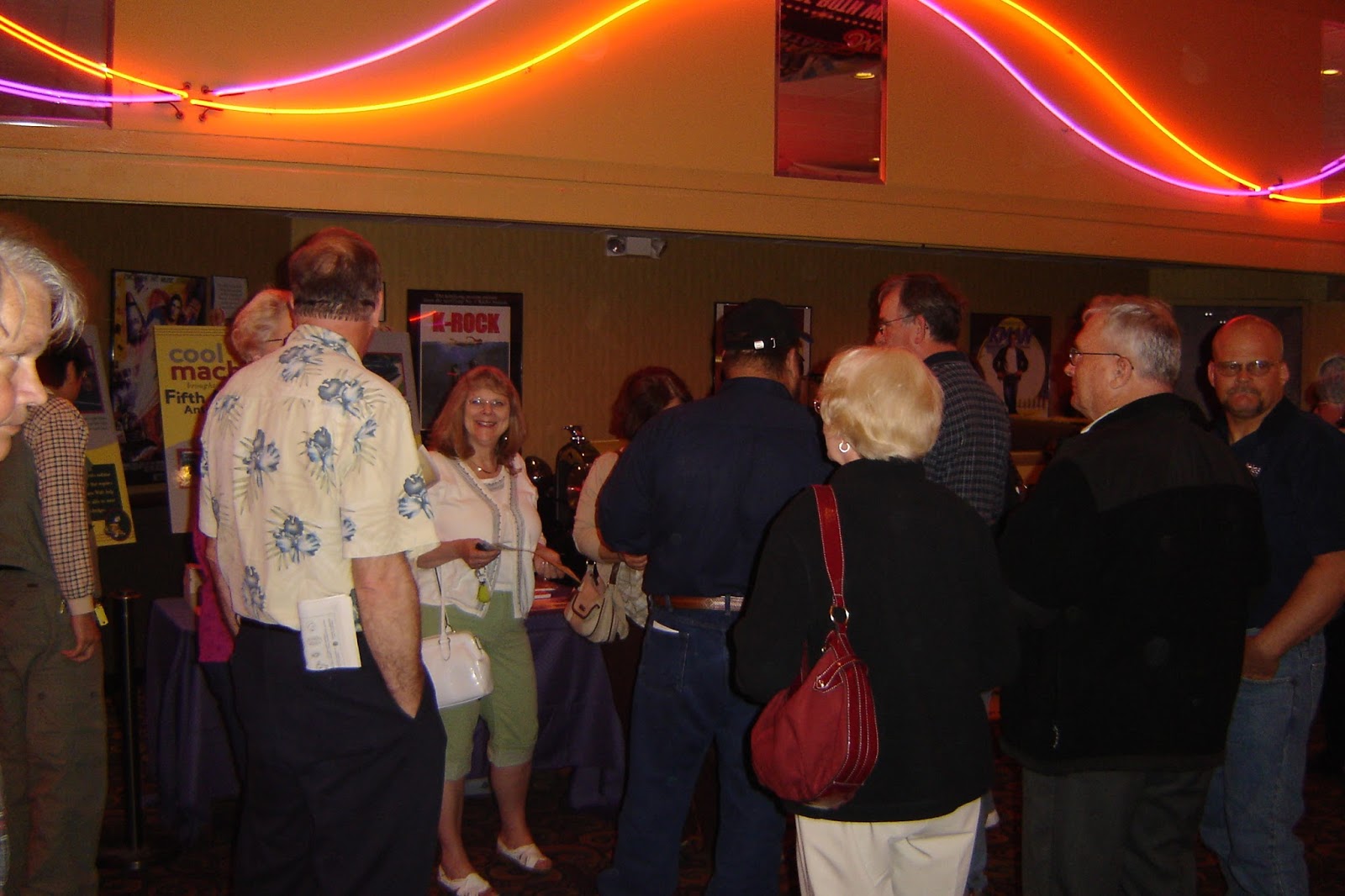
Those were the exact words of the local theatre manager in Manhattan Kansas when I asked him if I could put a life sized car in the lobby of his theater. The year was 1997 and I had worked on the antique vehicles in the upcoming movie release LA Confidential. All of the vintage police cars along with the 1950 Chevrolet that Danny DeVito drove, all had my 6-volt alternators and cooling fans installed on them.  The original plan to to have a movie premier in Kansas City because that is where James Elroy lived who wrote the book the movie was based off of.

I had an alternator customer in the Kansas City area that had a 1940's Packard Limo and I had arranged to have him pick up James and deliver him to the premier. James got called out of town at the last minute so I had to come up with Plan B. I decided to put a full sized car in the movie theater closer to home in Manhattan Kansas and explain my part in the movie.

So after I explained to the theatre manager what I wanted to do he hesitated for a while then said..."we have never had a full sized car in our lobby before but it might be interesting...can you find one that will fit?" I had an alternator customer in Manhattan Kansas with a 1929 Ford Model A Roadster that had the same alternator installed as I had used on the movie cars, and because the alternator fit on the left side of the engine it would make for an easy display.


The Doors And Door Hardware Had To Be Removed To Get The Car Inside The Theatre

I measured the doors of the theatre three different times and finally determined the only way the Model A would fit is if we took the doors off along with all of the hardware off of the door frames and then there would be only two inches to spare. It would be close.

Moving in day was on a Thursday during the afternoon matinee. With the doors and hardware off we carefully drove the Model A onto the sidewalk and aligned it up as best we could. Then we pushed it into the theatre by hand with barely an inch to spare on either side.


Not Much Room For Error...

One inside the car owner who was in his early 70's took advantage of an opportunity of a lifetime. He started his car and drove two laps around the snack bar and lobby before parking it in the display area! The grin on his face was a mile wide. He had clearly been waiting his whole life for an opportunity like this. The theater manager, the door repair guy, myself and about a dozen bystanders stood with our mouth open in amazement. Nobody saw that coming.


Two Laps Around The Snack Bar Ought To Do it...!


He Never Expected To Have His Car In the Lobby Of The Local Theater

I got the display setup in the lobby, while the doors got put back on the hinges, and the hinges back on the door frames, and all was good. The premier went off without a hitch. The theater manager and I took pictures of the display and I wrote a story that described my part in the movie. We sent that into the national theater trade magazine and the Manhattan Kansas theater won a marketing award for the best local promotion of a movie.

As for me...one of the highlights of the movie was seeing those six police cars coming over the hill at night with the lights and siren blaring full blast.  I could not have asked for a better testimonial for my 6-volt alternators. They clearly did the job and put an end to dead batteries and dim headlights.

I explained in the lobby display that I invented a 6-volt alternator and that my alternator will fix the common problems of hard starting and dim headlights that are commonly associated with antique vehicles. When I explained that to the movie patrons before the movie, most had kind of a glazed look on their face and it was clear they had no idea what I was talking about.

After the movie it was a different story. When those same movie patrons saw my 6-volt alternators in action it was an "aahaw" moment and they finally connected the dots. Many of those same patrons stopped by after the movie to look at the Model A a little closer, and ask more questions, as they now understood what my alternator did. Mission accomplished!


A Real Life Sized Antique Car In A Movie Theatre Draws A Lot Of Attention

The locals had no idea I worked on cars for the movie studios. This being my fourth such project it was time to educate the locals and have a little fun. Hopefully by looking at these pictures you can understand what is was like to put a full sized antique car in a movie theater.


Taking The Doors And Hardware Off Again To Get The Car Out


Yes It's Close... Go Slow....!!


This Is What He Was Looking At...


We Made It...That Was Fun

READ MORE

Latest

About Me

My photo
Since 1987, Fifth Avenue owner, Randy Rundle, has been making antique, classic and special interest vehicles more reliable and fun to drive.