Tech

New Products

Random Thoughts

Nostalgia

License Plate Tag Toppers...And A Lesson In Marketing 101

Posted on 6/28/16 with No comments


When you are the little guy starting out in business one of your biggest challenges is marketing. How do you get the word out about your business and your products when you advertising budget is limited?  It's Simple... you have to get creative. The second lesson you learn is that sometimes the answer to your problem is in plain sight, you just have to learn to look for it.

I got involved with what is now the Hemmings Great Race in 1989 as a way to market my new invention, a 6-volt alternator. In the race, during those early days, pre 1942 antique vehicles were driven 3500 miles across the United States in just two weeks time. It was common for a 125 cars to enter and have only 80-85 cars finish. Most of the breakdowns involved dead batteries, overheating, and fuel pump problems. Those things I could fix and I did, much to the happiness of the car owners.

The one thing I was having trouble with was marketing my company on the Great Race. I studied the Great Race teams and their cars and discovered most all of the corporate sponsors had big decals on  both sides of the cars. There was not much prime real estate left for me.

So I studied the videos of the Great Race for hours thinking their had to be a solution. Then it hit me like a ton of bricks...Tag Toppers! I had been collecting license plate Tag Toppers for more than twenty years. I have examples from auto parts stores, speed shops, car dealerships, tourist stops etc. I have a couple hundred in all. Why not find a company to make Tag Toppers with Fifth Avenue on them? How hard could that be? They would be a period correct accessory and not cost a lot. And...most important of all they would mount on the front and back of the car which nobody else was using.

So I started looking for a company that would make Tag Toppers again. That took another nine months as most of the companies that made the Tag Toppers in my collection were long out of business. I wanted authentic metal ones like the old days, no plastic! I finally found a company in Oregon that had started making Tag Toppers in 1945 and while the tag toppers had not been in their catalog for more than 20 years, but they still had the equipment around to make them. After many phone calls I  finally talked them into making Tag Toppers again.


The First Fifth Avenue Tag Topper from 1989

Did the Tag Topper idea work...? YOU BETCHA !  I started sponsoring Howard Sharp of Fairport New York in the Great Race beginning in 1990 and in 1993 he won! ESPN sports, yes that ESPN sports did a ten minute interview with Howard sitting in front of his 1929 Dodge Sport Roadster (one of 1200 made) at the finish line. Guess who got a free ten minute commercial on ESPN. Yes yours truly! You could read my name address and phone number on the front of his car as plain as day! All of those high dollar sponsors did not get a nickels worth of TV time because the camera never panned the side of the car. Those Tag Toppers turned out to be the best money I ever spent. I am quite proud to have out smarted the big dogs with their high dollar advertising budget.


After Howard won in 1993 he advanced to the expert class and bought this 1911 Velie out of a museum in South Dakota.  It also got the Fifth Avenue treatment with alternator, electric fuel pump, electric radiator cooling fan etc. He would finish in the top ten every year but having the oldest car in the race was a challenge. Climbing the steep grades in the mountains of Colorado and going thru all of those curvy roads in Arkansas was tough on Howard and the car. But he kept trying. In 2011 he won the Great Race driving the oldest car entered in the race, which turned 100 years old in 2011. More free Tag Topper advertising  : - )


  Fifth Avenue Sponsored 1911 Velie. We Won The Great Race in 2011.

I still make Fifth Avenue Tag Toppers today and you will find them on the Great Race cars I sponsor or have worked on. I also give them away to customers when they spend $400 or more on a order. I can make custom Tag Toppers for car clubs, to advertise car shows and special events. I have done about 40 different custom Tag Toppers over the years. They are a period correct advertising accessory.

I make Tag Toppers as "uppers" and "downers" so they can be mounted above or below the license plate which mean s they will fit most new cars and trucks as well as the antique vehicles. I have had a number of car clubs use them for fund raisers. I just did 400 Tag Toppers for the Willys Jeep Club of America in November 2015. I sell Tag Toppers to car clubs and groups at my cost to keep the volume up to make it worth while for the Tag Topper Company to keep making them for me. Not everything you do should be about money. Sometimes you should do things for the good of the hobby.

Thanks to modern technology you can now have up to five colors on your Tag Topper, you can bleed to the edge which means the color can go all the way to the edge without a border, and you can get "uppers" or "downers". Most any logo will work as long as the artwork is good and sharp, and as you can see in the Willys Tag Toppers the detail can be pretty fine. The ink on these Tag Toppers is UV protected and is the same ink they use on interstate road signs and ambulances. I say it is Kansas June Bug in July tough!! You can power wash these at the car wash to get the bugs off and they will survive with flying colors. They are very durable.


The Willys Overland Jeepster Club Designed This Tag Topper

So that's the story on Tag Toppers and how they came about at Fifth Avenue. Who Knew that the advertising Tag Toppers I had collected for the past 20 years would prove to be the answer to my advertising in the Great Race. The picture below is Howard's new ride a 1916 Hudson. The Velie was retired after the 2011 race and the 1916 Hudson took it's place.


This Tag Topper is displayed on the Fifth Avenue Sponsored 1916 Hudson that won the Great Race in 2015. Winning the Great Race is Always Good For Business


Another Tag Topper displayed on a 1936 Ford Police Car Entered In The Great Race. Satisfied Customers Are Happy To Advertise ForYou When The Advertising Looks Period Correct.

 If you are interested in having Tag Toppers made for your car club or event drop me an email and let me know what you want and how many and I will get you a quote
. Minimum number is 50 and that can be uppers or downers or a combination of both. You can choose any background color and up to five ink colors. The biggest expense is in the setup, which is a fixed cost. The setup costs depends on your design and how many colors you choose. It works better to buy as many Tag Toppers as you can afford. Then you can divide the setup costs over a greater number of Tag Toppers and the cost per Tag Topper will be less. You only pay for the setup charge once if you do not change your design or colors. There is no setup charge on reorders.
--------------------------------------------------------------------------------------------------------------------------


We Have These For Sale $20.00 Each Post Paid - Shipped Priority Mail.

Meanwhile If you want a genuine Fifth Avenue Tag Topper for your collection they are $20.00 each post paid. They are the exact same Tag Toppers that you see on the Great Race cars. Just specify "upper" or "downer."

--------------------------------------------------------------------------------------------------------------------------

A Few Samples Of The Originals...
And now a few of the Tag Toppers in my collection. No they are not for sale, they are part of my collection. There were literally dozens of Tag Topper manufacturing companies in the 1930's thru the 1950's. There were all shapes and sizes and they advertised most everything from schools, to speed shops, to car dealerships, to tourist attractions. (I collect mostly the auto related Tag Toppers.) They used to be a giveaway item. For example... when you went to the Royal Gorge in Colorado back in the day, they would put a tag topper on your car while it was parked in the parking lot and you were riding the tram to the bottom of the Royal Gorge. When you came back the Tag Topper was installed so everyone knew where you went on vacation.
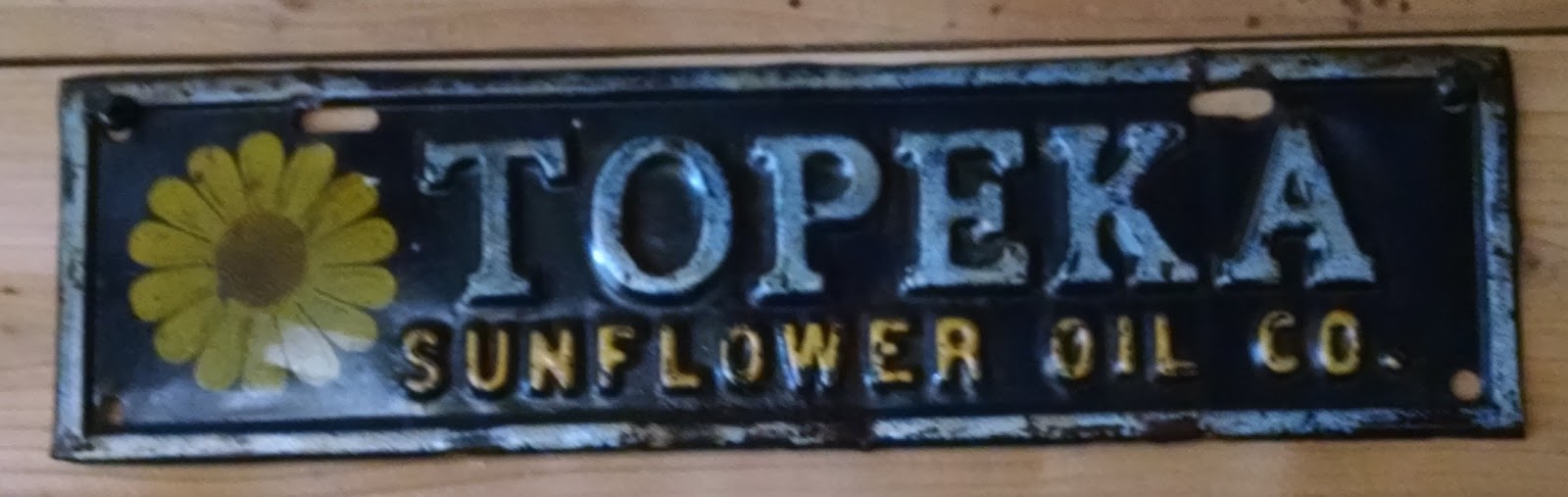

I am told this company was only in business five years, a casualty of the Depression


The Railroad had more money to spend on Tag Toppers than most businesses. This Tag Topper is porcelain like most of the early gasoline station signs were.


This one fit under the rear truck handle bezel


I will add more pictures of the originals in my collection as time allows...
--------------------------------------------------------------------------------------------------------------------------
Meanwhile...If you have an original auto related Tag Topper that you want to sell you can email me a picture of what you have and the price you are asking and I will take a look. My email is fifthavegarage@gmail.com Be sure and put "Tag Topper" in the subject line...thanks! Randy
--------------------------------------------------------------------------------------------------------------------------
READ MORE

How A Synchromesh Transmission Works...

Posted on 6/15/16 with No comments


If you have ever driven an antique vehicle with a non-synchromesh transmission, with straight cut gears... you have no doubt been educated in the fine art of "double-clutching" and feathering the gas pedal to match the engine RPMs to the transmission RPMs, so the manual shift goes a little smoother. If you fail to do all of the above in a coordinated effort, your passengers will ask you if you think the transmission gears are made of rubber or some other snide remark. The gears will grind, you will get frustrated, rev the engine, making the attempted shift worse than before. That will make you appreciate a synchromesh transmission much more.

In this film dated 1936 is the introduction of how a synchromesh transmission works. This is yet another Jam Handy movie produced for Chevrolet (all synchromesh transmissions work basically the same). This movie like the rest in the series is very good at explaining how complicated things work. Grab some popcorn and enjoy the show...


READ MORE

How Hydraulic Brakes Work...

Posted on with No comments


It was during the mid 1930's that hydraulic brakes were introduced by most car manufacturers. Prior to that with a few exceptions, mechanical brakes were the norm, which meant all of the brake shoes located in the drums behind the wheels were activated by way of mechanical rods connected to the brake pedal. Those rods needed constant adjustment in order to make sure the vehicle stopped straight. If the rods were not all adjusted equally the vehicle would tend to pull in one direction or the other causing the car to swerve,  as unequal pressure was applied the brake shoes.

Hydraulic brakes solved a lot of the problems associated with mechanical brakes along with providing more stopping power with less effort. After 80 years we take hydraulic brakes for granted but they were a revolutionary upgrade at the time of their introduction.

Now that you know a little of their history it's time you understood the principles of how hydraulic brakes work.  So... here is a training film from 1936 that explains just that. Watching this movie is much more fun than reading some old greasy shop manual. Enjoy...


READ MORE

How An Automotive Differential Works

Posted on 6/8/16 with No comments


Most of us motor heads past the age of 50, know at least the basics of how an automotive differential works, it was something we learned in automotive shop class way back in high school. Sadly automotive shop classes have disappeared from many high schools, no doubt in part because modern cars have got a lot more complicated than they were when we were in school. Even if you know how an automotive differential works... trying to explain it to someone else is more than a little complicated. It is one of those things that is simple to understand but difficult to explain. So here is a little help compliments of Chevrolet who in 1937 had the Jam Handy Company complete yet another technical film project. In this film they have done an excellent job of explaining how an automotive differential works.  Grab some popcorn and enjoy.


READ MORE

Starters...How They Work

Posted on 5/9/16 with No comments


Taking The Mystery Out Of Starters...
Starters are a mystery to most antique vehicle owners. They are either a work or a don't work item under the hood of your antique vehicle. When the parts inside of your starter begin to wear over time they can become the source of your hot start problems, or worse yet, your no start problems.

This video explains how starters work much better than the explanations I got thirty years ago out of shop manuals and text books. If I had been able to watch this video like you are able to now, it would have made my young life much easier. So take advantage and get your education on starters 101. Who says the best things in life are not free...

And just for the record "NO YOUR STARTER WILL NOT RUN BACKWARDS IF YOU REVERSE THE POLARITY OF YOUR ELECTRICAL SYSTEM..." I have heard that "fact" repeated dozens of times and it is not true. When you reverse the polarity of your electrical system all that you are doing is changing the direction the current flows but it still ends up the same place. So in the case of the starter the current from the battery still ends up at the starter battery post where the battery cable connects. How the battery current got there, the starter does not care. So as long as the current arrives at the same place the starter will work the same as it always did. You would have to change the starter internally to make it run backwards.

So after you watch this video your next step should be to order a copy of the new "Hot Start" book. Together with this video you will have a full understanding of how the starting system works and how to troubleshoot yours.

Favorite beverage on deck, popcorn in the waiting, you are ready to begin your lesson on starter motors. Enjoy.


How A Starter Works
READ MORE

Your Career In Automotive Service And Repair...

Posted on 4/29/16 with No comments


This film is a snapshot of what is was like to have a career in automotive service in the 1940's. There was some innocence in those days and most people considered someone that was able to repair an automobile a person that should be to looked up to. This film is a recruiting film that showed all of the different occupations related to an automotive career.

It is a good reminder of how far we have come in seventy plus years since this film was made. This film gives you a picture of what life was like in a service garage in those days. Shop coats were the norm and washing parts in a five gallon bucket of gasoline was standard operating procedure.

Finally I look at this film and note all of the advertising signs on display in the garages and dealerships. Most any of those signs, especially the neon ones would look good in my shop and equally as good in yours.

Things were a lot more simple and "hands-on"than they are today. Maybe that is why those of us in the older generation understand things better and seem to have a common sense knowledge about how antique vehicles work and how to fix them.

So with all of this in mind take a few minutes, gather up your favorite beverage and enjoy a trip back in time as you consider a career in automotive service.


READ MORE

Buying A Battery For Your Antique Vehicle...

Posted on 4/22/16 with No comments


Buying a battery for your antique vehicle is a fairly straightforward process. You want to buy the one that provides the most cranking amps in your size. Most all batteries today are at least 650 cranking amps, with some like the Optima brand, are a thousand cranking amps. Most starter  motors will require about 200 amps or less when cranking over the engine, even when the engine is warm. So the difference between 650 cranking amps and a thousand amps is a 50% difference. Those extra cranking amps will come in handy on occasion and the less hard a battery has to work, the longer it will last. Batteries with more cranking amps also tens to have a greater reserve capacity which means when you forget and leave your lights on you will have a longer grace period before the battery goes completely dead.

 As you might suspect you will end up paying a little more for the battery with more cranking amps. for the small difference in price it will be money well spent. Most quality batteries like the Optima Brand also come with a 2-year free replacement warranty and are designed to last five to seven years in most applications. Less battery maintenance means more driving time in your antique vehicle!

When shopping for a battery you also need to look for a sealed or maintenance free battery.  In the old days most batteries had screw on caps and it was common to have to add water to the battery every three months. Having to add water came about in part because the charging systems of the day were not all that accurate and excessive output from the charging system was commonplace, which would then boil some of the water out of the battery.

The other common defect of early batteries was that the posts would corrode as the battery vented gases from the charging process. It was common to have to clean battery posts about three or four times a year as a general maintenance item. Some vehicles owners waited until their vehicle would not start to clean their dirty battery posts or check the water level in the battery.

You also had to be careful in the old days installing or removing a battery from your vehicle. If you spilled any of the acid from inside the battery (which was easy to do if you had to tip the battery to get it into the battery box) the acid would destroy the paint on your vehicle.

Today most batteries are sealed so the risk of spilling acid on your paint has disappeared. Batteries today do not vent gases so the posts no longer corrode. Modern batteries are also built better and typically last longer than the batteries of yesteryear due in part to modern technology... the charging systems are much improved, along with the makeup of the plates inside of the battery itself.

So the best advice is buy the battery that is sealed so there is no risk of acid spilling and damaging your paint, and the one that has the largest amount of cranking amps. Be sure your battery cables and starter are in good working order. I install one gauge battery cables on every car I work in to be sure all of the current from the battery gets to the starter.

After buying a new battery I always put it on a Battery Tender overnight so it is fully charged when I install it. If you do not drive your antique vehicle on a daily basis a battery tender is a good investment. A battery tender will keep your battery fully charged while your vehicle is in storage and will also provide current for any static drain like the memory in you radio, so you do not loose your station settings. A battery will last about 30 % longer if you connect it to a Battery Tender.


A battery tender will come with a short wiring harness that attaches to the battery and a long cord that attaches from the battery tender. The two cords plug into each other like an extension cord (so you cannot connect the cables backwards) and can remain plugged in until you are ready to drive your vehicle. Simply unplug the battery tender cord from the battery harness and you are ready to go. When you return plug the cord back in and you are done.

As an added safety feature most of my customers use a Battery Master Switch like this one...


These are call a Battery Master Switch and are made to mount on the negative post of the battery. In turn your negative battery cable mounts to the end of the Battery Master switch. To disconnect you battery simply turn that black knob to the left a half a turn (remember..righty tighty lefty loosey) and you battery is disconnected. To reconnect the battery just turn the knob to the right until it is tight. If you go to a car show and want to make sure no one messes with your car just unscrew the knob completely and put it into your pocket. Then you know everything is safe and secure. Some insurance companies will lower your premiums if you have one of these installed so be sure and ask. It is worth the piece of mind to know that while your car is in storage there is little risk from an electrical fire if you have one of these installed.

Optima Batteries, Battery Tenders, and the Battery Master Switches can be found in the "Parts" menu on the website.


READ MORE

Latest

About Me

My photo
Since 1987, Fifth Avenue owner, Randy Rundle, has been making antique, classic and special interest vehicles more reliable and fun to drive.